
The 10 Things I Can Tell About Your Pool Cage in the First 60 Seconds
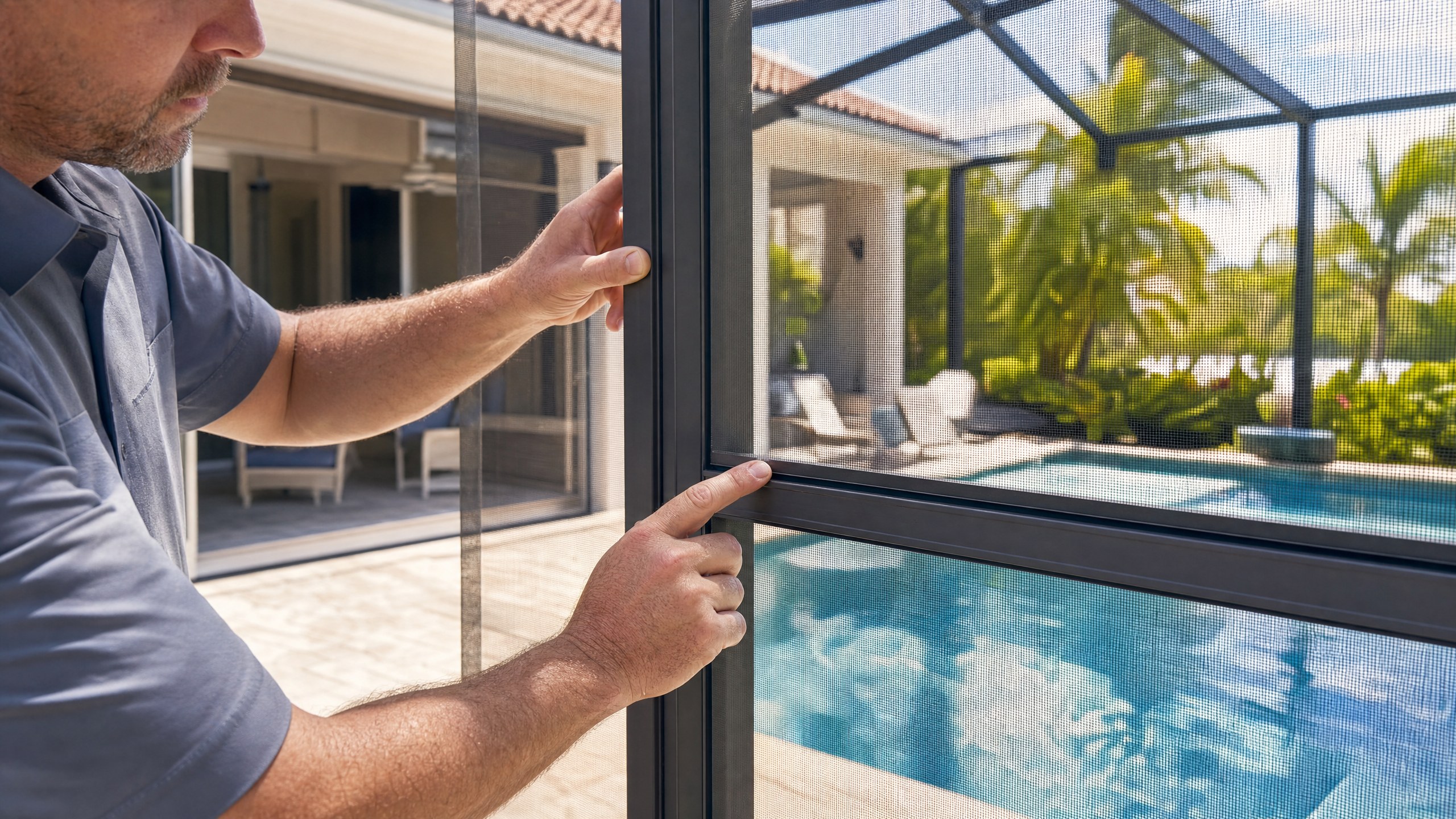
By Gian Nicolo, Owner
One of the questions homeowners ask me all the time is:
“Gian, how do you know so quickly whether a pool cage has problems?”
The answer is experience.
After looking at thousands of pool enclosures throughout Florida, you begin seeing patterns.
You stop looking at the obvious things.
You start looking at the clues.
Most homeowners see:
- Screens
- Paint
- Doors
- Aluminum
An experienced pool enclosure specialist sees:
- Structural history
- Maintenance habits
- Corrosion risk
- Hurricane exposure
- Future repair needs
Within the first 60 seconds of arriving at a property, I can usually tell quite a bit about the condition of the enclosure.
Not because I’m guessing.
Because pool cages leave clues.
And those clues tell a story.
Clue #1: The Rust Stains
The first thing I often look for isn’t the screen.
It’s rust.
Specifically:
- Brown streaks
- Fastener staining
- Corrosion marks
Why?
Because rust stains often reveal hidden deterioration occurring above the stain itself.
The stain isn’t the problem.
The source is.
One rust stain may not mean much.
Dozens of rust stains often tell a very different story.
Read the Florida pool cage industry’s fastener problem and pool cage fastener replacement.
Clue #2: The Pool Cage Door
I always pay attention to the door.
Why?
Because doors are honest.
A homeowner can paint an enclosure.
Replace screens.
Clean the structure.
But the door usually tells the truth.
A door can reveal:
- Structural movement
- Settlement
- Fastener deterioration
- Hurricane stress
Many homeowners think they have a door problem.
Often the door is reporting an enclosure problem.
See why your pool cage door may be telling you something.
Clue #3: The Color of the Aluminum
Experienced inspectors notice oxidation immediately.
A heavily oxidized enclosure often tells us:
- The age of the finish
- Exposure history
- Maintenance patterns
- Restoration potential
Oxidation alone doesn’t indicate structural concerns.
But it tells us where to look next.
Learn more in pool cage oxidation: what Florida homeowners should know.
Clue #4: The Condition of the Screens
The screens reveal more than homeowners realize.
We look for:
- Brittleness
- Tension
- Age
- Failure patterns
One torn screen panel is usually just a torn screen.
Twenty torn panels tell a completely different story.
The pattern matters.
Compare full rescreening vs individual panel replacement.
Clue #5: The Shape of the Enclosure
Most homeowners never step back far enough.
We do.
From a distance, we’re evaluating:
- Alignment
- Geometry
- Deflection
- Movement
A pool cage should look balanced.
Subtle changes often reveal hidden issues.
Clue #6: The Neighborhood
This surprises homeowners.
But location matters.
Immediately I begin considering:
- Coastal exposure
- Wind exposure
- Salt air
- Tree coverage
- Hurricane history
The same enclosure behaves differently in different environments.
Location tells us what risks are most likely.
See why Florida salt air destroys pool cages miles from the water.
Clue #7: Previous Repairs
Previous repairs are often visible.
And they tell stories.
We look for:
- Different fasteners
- Patchwork repairs
- Screen inconsistencies
- Structural modifications
Sometimes those repairs were excellent.
Sometimes they reveal problems that deserve further evaluation.
Clue #8: The Roof System
If roof panels are present, they receive immediate attention.
Why?
Because roof systems experience:
- Wind loads
- UV exposure
- Water intrusion
- Fastener stress
Problems often develop here before homeowners realize it.
Clue #9: Maintenance History
Believe it or not, many enclosures reveal how they’ve been maintained.
Signs include:
- Cleanliness
- Corrosion levels
- Hardware condition
- Screen condition
A well-maintained enclosure usually looks different than one that has been neglected for years.
And that difference matters.
See why Florida homeowners wait too long to restore their pool cage.
Clue #10: The Homeowner’s First Question
This may be the most revealing clue of all.
The first question homeowners ask often tells me exactly what they’re worried about.
Sometimes they’re worried about:
- Cost
Sometimes:
- Appearance
Sometimes:
- Hurricane damage
Sometimes:
- Structural concerns
Understanding what matters to the homeowner is just as important as understanding the enclosure itself.
What Most Homeowners Miss
The biggest difference between homeowners and experienced inspectors is not knowledge.
It’s perspective.
Homeowners look at the obvious.
Professionals look at the indicators.
The clues.
The patterns.
The small details that reveal larger truths.
That’s why a proper inspection is so valuable.
Not because we’re smarter.
Because we know where to look.
Read what most pool cage contractors miss during an inspection and the hidden problems found on most inspections.
The Goal Isn’t Finding Problems
This is important.
Many homeowners assume inspectors are looking for reasons to sell work.
That’s not how professionals think.
The goal is understanding the condition of the enclosure.
Sometimes the news is good.
Sometimes concerns are identified.
Either way, the homeowner receives information that helps them make informed decisions.
And informed decisions are almost always better than expensive surprises.
Before hiring anyone, use 25 questions every homeowner should ask a pool cage contractor.
Final Thoughts
Pool cages leave clues.
Every enclosure tells a story.
The age.
The maintenance history.
The environmental exposure.
The storm history.
The structural condition.
Most homeowners only see a portion of that story.
An experienced inspection helps reveal the rest.
Because the most valuable information about a pool cage is often the information you can’t see until you know exactly where to look.
Try a 5-minute pool cage inspection yourself, then schedule a professional evaluation when something doesn’t look right.
Call 727-645-9575 or book online.
Need Pool Cage Repair in East Lake? Call 727-645-9575 or book a free estimate online .