
The Hidden Problems We Find During 80% of Pool Cage Inspections (And Why Most Homeowners Never See Them)
By Gian Nicolo, Owner
Most homeowners call us because of something they can see.
A torn screen.
A faded pool cage.
A door that won’t close properly.
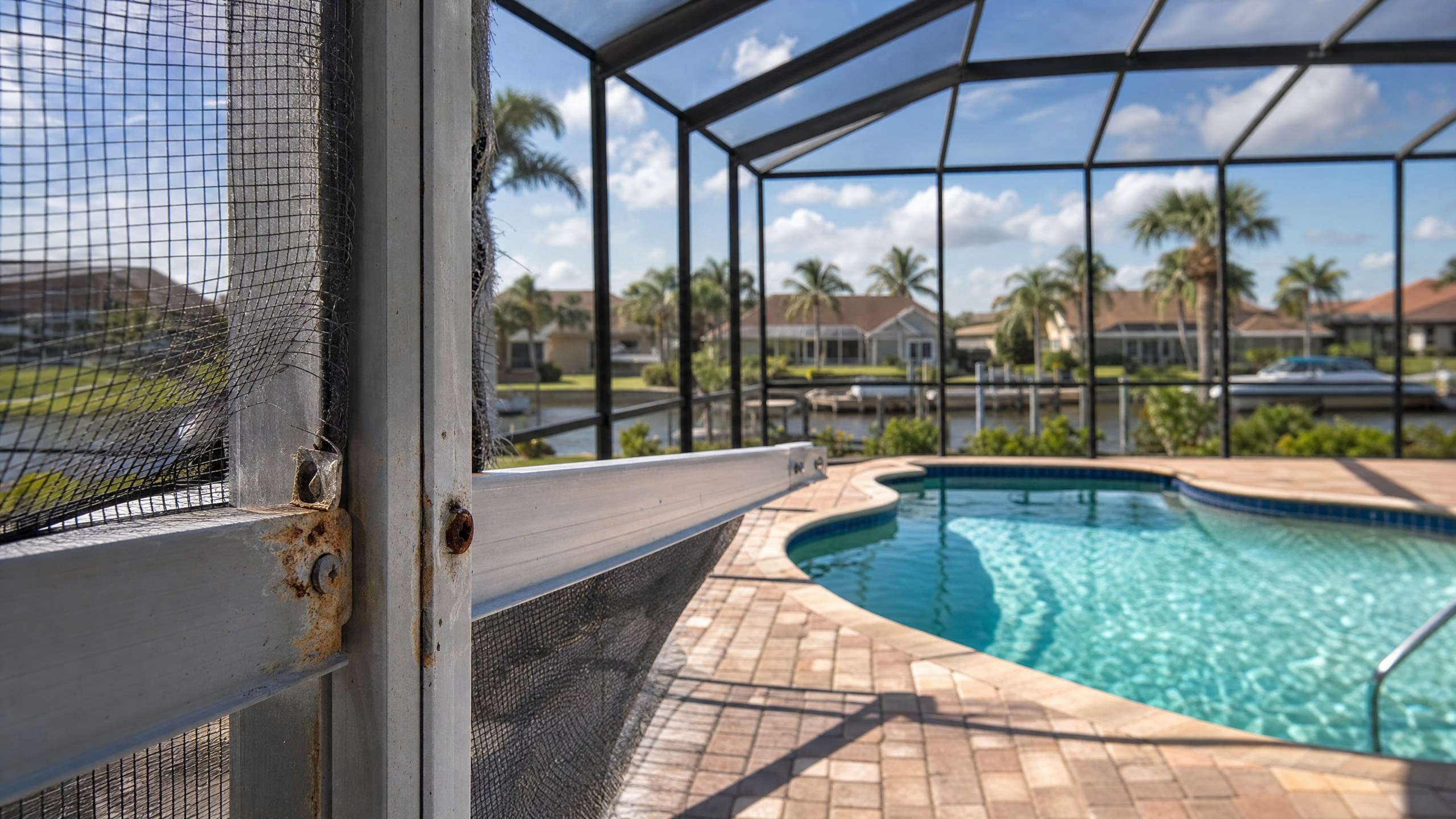
A rust stain running down an aluminum post.
What surprises many homeowners is what we find after we arrive.
After years of inspecting pool enclosures throughout Florida, I’ve learned something important:
The problem homeowners notice is often not the real problem.
It’s simply the symptom.
In fact, some of the most expensive issues we discover are completely hidden from view.
This article explains the most common hidden problems we find during professional pool cage inspections and why early detection can save homeowners thousands of dollars.
The Pool Cage Looks Fine. So Why Inspect It?
Pool cages rarely fail all at once.
They deteriorate gradually.
The deterioration occurs inside connections, around fasteners, beneath oxidation, behind screen systems, and within structural joints.
Most homeowners never see these areas.
That’s why professional inspections matter.
Start with our pool cage inspection checklist and 5-minute pool cage inspection.
Hidden Problem #1: Fastener Failure
If there is one issue we find more than any other, it’s deteriorating fasteners.
Your enclosure may contain hundreds—or even thousands—of screws holding the entire structure together.
By the time rust stains appear, corrosion has often been developing for years.
See the pool cage screw crisis and pool cage fastener failure.
Hidden Problem #2: Structural Movement
What we often find includes slight separation at connections, minor shifting, stress points, movement near doors, and load-related deflection.
Doors frequently reveal structural movement before anything else.
Read why your pool cage door may be telling you something important.
Hidden Problem #3: Previous Hurricane Damage
We’ve inspected countless enclosures that survived major storms but sustained hidden damage — stressed connections, bent members, compromised fasteners, and weakened attachment points.
See can a pool cage be repaired after hurricane damage.
Hidden Problem #4: Corrosion Beneath the Surface
We frequently find corrosion around hardware, inside connections, near attachment points, and around roof systems.
What matters isn’t whether the corrosion looks bad — it’s what it’s doing to the enclosure.
Hidden Problem #5: Aging Screen Systems
Screen materials often become brittle, dry, weakened, and less flexible long before panels tear.
See how often you should rescreen and 7 signs your pool cage needs rescreening.
Hidden Problem #6: Roof System Issues
Roof systems are among the least inspected components.
Small issues can remain hidden for years before becoming expensive repairs.
Hidden Problem #7: Deferred Maintenance
Most major projects we perform began as manageable maintenance issues.
The problem wasn’t the original defect.
The problem was waiting.
The Most Expensive Words in Pool Cage Ownership
“It still looks okay.”
Appearance alone is rarely a reliable indicator of condition.
Some of the most concerning enclosures we’ve inspected looked perfectly acceptable from the patio.
Why Professional Inspections Save Money
Inspections help identify small problems, developing issues, maintenance opportunities, and structural concerns.
The earlier a problem is discovered, the more options usually exist.
Final Thoughts
Most pool cage problems don’t begin with dramatic failures.
They begin quietly.
The homeowners who spend the least over the life of their enclosure are usually the ones who identify issues early.
Call 727-645-9575 or book online.
Need Pool Cage Repair in Holiday? Call 727-645-9575 or book a free estimate online .