
What Most Pool Cage Contractors Miss During an Inspection (And Why It Matters)
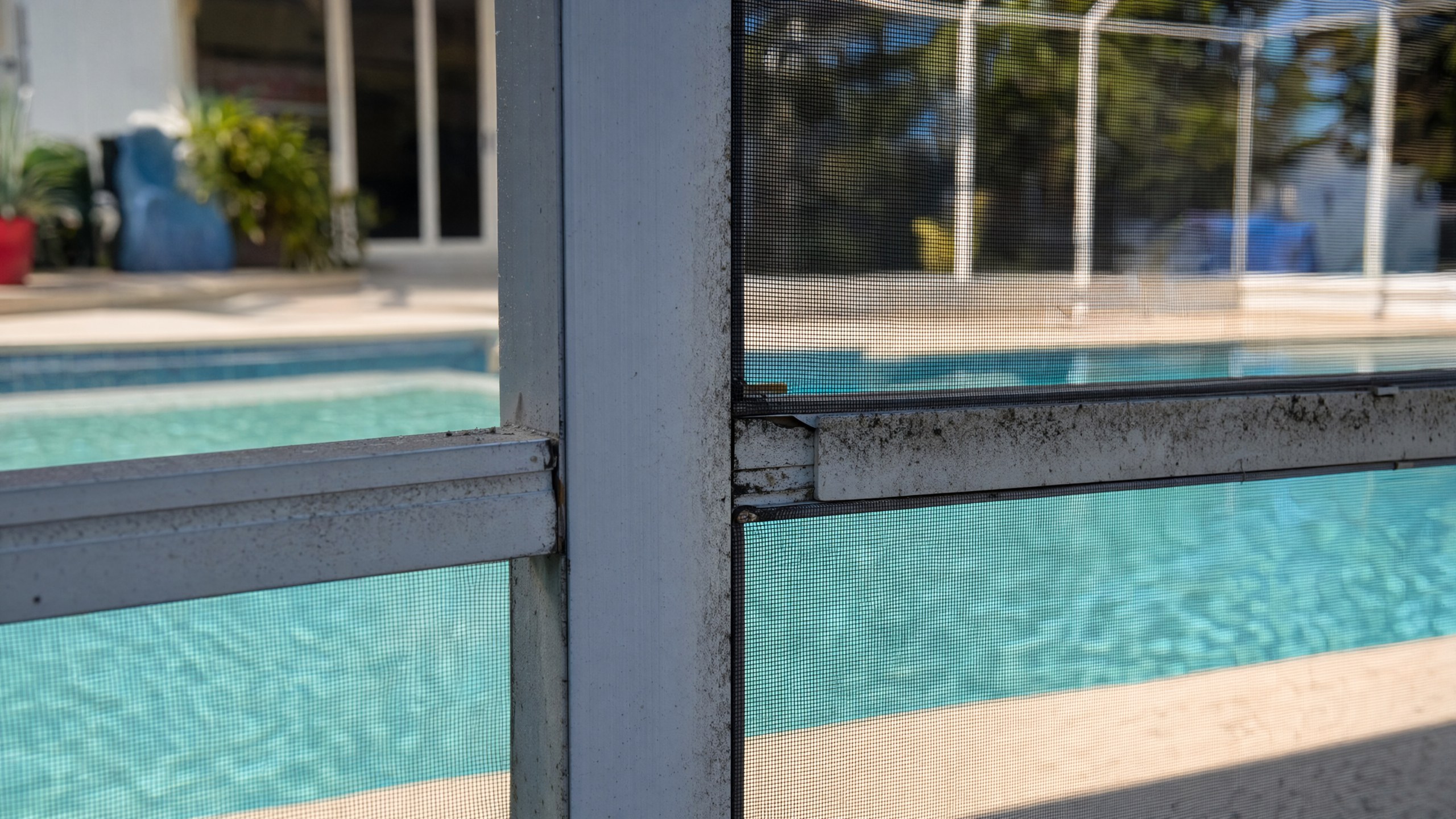
By Gian Nicolo, Owner
One of the biggest misconceptions homeowners have is believing all pool cage inspections are the same.
They’re not.
Not even close.
I’ve watched contractors walk around a pool enclosure for five minutes, glance at a few screens, look at a door, and hand the homeowner an estimate.
The homeowner assumes an inspection occurred.
In reality, an estimate occurred.
Those are two completely different things.
A real pool cage inspection isn’t about generating a price.
It’s about understanding the condition of the enclosure.
And that’s where many contractors fall short.
Because the most important issues affecting a pool cage are often the issues homeowners cannot see.
And unfortunately, they’re also the issues many contractors never look for.
The Difference Between an Estimate and an Inspection
Let’s start with something important.
Most homeowners request an estimate.
What they actually need is an evaluation.
An estimate answers:
“How much?”
An inspection answers:
“What condition is the enclosure in?”
The order matters.
Because if the condition isn’t understood first, the estimate may be based on incomplete information.
This is one reason homeowners often encounter surprises after work begins.
The original inspection wasn’t actually an inspection.
It was a sales appointment.
See the hidden problems found on most pool cage inspections for what a thorough evaluation often reveals.
Mistake #1: Focusing Only on the Problem the Homeowner Mentioned
A homeowner calls and says:
“I have torn screens.”
Many contractors immediately begin discussing screens.
The problem?
The torn screen may not be the real issue.
Sometimes torn screens indicate:
- Structural movement
- Fastener deterioration
- Previous storm stress
- Aging materials
An experienced inspector investigates causes.
Not just symptoms.
Because solving the wrong problem rarely creates the right outcome.
Mistake #2: Ignoring Fasteners
If you’ve read my previous articles, you know I talk about fasteners constantly.
There’s a reason.
They’re one of the most important components in the enclosure.
Yet they’re also one of the least inspected.
Many contractors focus on:
- Screens
- Paint
- Appearance
Meanwhile, connection systems may be deteriorating.
The enclosure can look great while hidden corrosion develops throughout the structure.
This is why fastener evaluation should always be part of a professional inspection.
Read the Florida pool cage industry’s fastener problem and pool cage fastener replacement.
Mistake #3: Not Looking for Structural Movement
Pool cages move.
The question isn’t whether movement exists.
The question is whether the movement is normal.
Experienced inspectors look for clues such as:
- Door alignment changes
- Uneven gaps
- Stress points
- Distorted framing
- Load-related movement
Most homeowners never notice these subtle changes.
Many contractors don’t either.
Mistake #4: Missing Hurricane History
Every pool cage has a story.
And in Florida, hurricanes are often part of that story.
One of the first things I want to know is:
How many storms has this enclosure experienced?
Previous storm damage often leaves clues:
- Repairs
- Structural stress
- Hidden movement
- Connection issues
A cage that survived a hurricane isn’t necessarily a cage that escaped damage.
That’s an important distinction.
See why your neighbor’s pool cage survived the hurricane and what to inspect the day after a storm.
Mistake #5: Evaluating Appearance Instead of Condition
This is probably one of the biggest mistakes in the industry.
Some contractors are heavily influenced by appearance.
The enclosure looks nice.
Therefore it must be healthy.
That’s dangerous thinking.
I’ve inspected beautiful pool cages with serious hidden concerns.
I’ve also inspected ugly pool cages that were structurally impressive.
Appearance matters.
Condition matters more.
Mistake #6: Ignoring Door Performance
Pool cage doors tell us an incredible amount about the enclosure.
Doors reveal:
- Movement
- Settlement
- Connection issues
- Structural changes
A sticking door is not always a door problem.
Sometimes it’s an enclosure problem.
When inspectors ignore doors, they often miss valuable information.
Read why your pool cage door may be telling you something.
Mistake #7: Failing to Evaluate Future Risk
Most inspections focus on today’s condition.
The best inspections also consider tomorrow’s condition.
Questions we ask include:
- What is deteriorating?
- What is likely to fail next?
- What should the homeowner monitor?
- What maintenance should occur now?
The goal is helping homeowners stay ahead of problems.
Not simply documenting current ones.
See why Florida homeowners wait too long to restore their pool cage.
Mistake #8: Looking for Repairs Instead of Looking for Causes
This may be the most important point in the entire article.
Many contractors identify problems.
Fewer identify causes.
For example:
Problem:
Torn screens.
Possible causes:
- Aging materials
- Structural movement
- Hurricane stress
- Installation issues
The repair addresses the symptom.
The inspection should identify the cause.
Without understanding the cause, the same problem often returns.
What We Look for During the First Five Minutes
Within minutes of arriving at a property, we begin evaluating:
Structural Alignment
Door Performance
Rust Stains
Screen Condition
Oxidation
Previous Repairs
Fastener Clues
Hurricane Exposure Indicators
These observations help shape the rest of the inspection.
The goal isn’t finding reasons to sell work.
The goal is understanding the enclosure.
Compare this to a 5-minute pool cage inspection you can do yourself.
The Homeowners Who Benefit Most from Thorough Inspections
The homeowners who gain the most value are usually those who:
- Own older enclosures
- Live near the coast
- Have experienced storms
- Are considering restoration
- Have never had the enclosure professionally evaluated
For these homeowners, inspections often uncover issues that would have otherwise remained hidden.
Why Inspection Quality Matters
A poor inspection creates poor decisions.
A thorough inspection creates informed decisions.
And informed decisions almost always lead to better outcomes.
Because the quality of the recommendation depends on the quality of the evaluation that came before it.
Before hiring anyone, use 25 questions every homeowner should ask a pool cage contractor and read what drives pool cage restoration costs.
Final Thoughts
Most homeowners don’t know what should happen during a pool cage inspection.
That’s understandable.
They hire professionals because professionals are supposed to know.
The problem is that not all inspections are created equal.
The best inspections don’t focus on the obvious.
They focus on the overlooked.
Because the most expensive pool cage problems are rarely the ones homeowners can see.
They’re the ones hiding behind the symptoms.
And finding those problems is what separates a true inspection from a simple estimate.
Call 727-645-9575 or book online.
Need Pool Cage Repair in Odessa? Call 727-645-9575 or book a free estimate online .