
Why Home Inspectors Pay Attention to Pool Cages (Even Though Most Homeowners Don't)
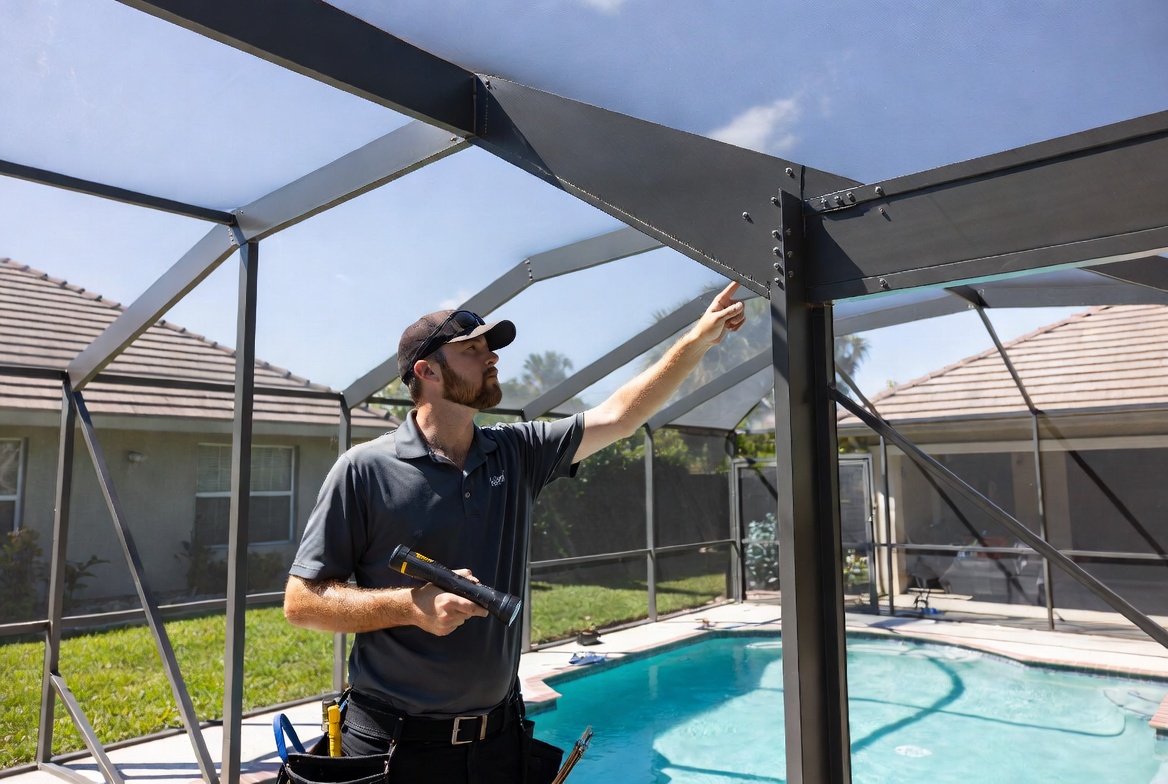
By Gian Nicolo, Owner
When most homeowners think about a home inspection, they think about:
- Roofs
- Air conditioners
- Electrical systems
- Plumbing
- Foundations
Very few people think about the pool cage.
In fact, many homeowners are surprised when a home inspector spends time evaluating their enclosure at all.
After all, it’s “just a screen cage,” right?
Not exactly.
To a home inspector, a pool enclosure is one of the largest exterior structures attached to the property.
And while inspectors may not evaluate it to the same depth as a pool cage specialist, they absolutely pay attention to it.
Why?
Because pool cages tell a story.
About maintenance.
About deferred repairs.
About property condition.
And sometimes about future expenses.
The Pool Cage Is One of the Largest Structures on the Property
Take a step back and look at your enclosure.
Many pool cages are:
- Hundreds of square feet
- Attached to the home
- Structurally engineered
- Exposed to Florida weather year-round
In some cases, the enclosure covers more square footage than the home’s garage.
That’s not a minor structure.
That’s a significant component of the property.
Home inspectors understand this.
Which is why they rarely ignore it.
What Home Inspectors See That Buyers See
This is important.
Home inspectors don’t just identify problems.
They identify things buyers will notice.
Examples include:
Torn Screens
Rust Stains
Corrosion
Damaged Doors
Structural Movement
Missing Components
The inspection report often becomes the buyer’s roadmap.
Which means enclosure issues can quickly become negotiation points.
Many of the conditions inspectors flag first are the same ones we document in Florida pool cage inspection surprises — problems that look minor from the pool deck but read very differently on paper.
Why Pool Cages Matter During Home Sales
Many homeowners underestimate how much influence a pool cage has during a transaction.
Buyers often see:
- The pool
- The enclosure
- The lanai
- The outdoor living area
before they fully appreciate the rest of the property.
The outdoor environment creates a first impression.
And first impressions matter.
A deteriorated enclosure often raises questions.
Questions lead to concerns.
Concerns often lead to negotiations.
That is exactly why pool cages and home value are more connected than most sellers realize — the enclosure shapes buyer perception long before anyone discusses square footage or comparable sales.
The Deferred Maintenance Signal
One of the things home inspectors are evaluating is overall maintenance.
Because maintenance habits tend to be consistent.
If a buyer sees:
- Torn screens
- Oxidation
- Corrosion
- Door issues
they often wonder:
“What else hasn’t been maintained?”
The pool cage becomes a signal.
Not just about the enclosure.
About ownership.
That’s why maintenance creates value far beyond the enclosure itself.
Hidden problems pool cage inspections reveal often explain why a backyard that looks acceptable to the seller raises red flags for a buyer reading an inspection report.
The Rust Stain Problem
Rust stains are one of the first things inspectors often notice.
Why?
Because they’re visible.
And visible issues create questions.
The inspector may not diagnose the exact cause.
But the report often documents the condition.
The buyer reads the report.
The concern grows.
And suddenly a relatively small issue becomes part of a larger conversation.
Why pool cage screws rust in Florida is one of the most common root causes behind those stains — and one of the most overlooked until inspection day.
What Buyers Usually Think
Most buyers are not enclosure experts.
They’re simply trying to estimate future expenses.
When they see:
- Torn screens
- Fading
- Corrosion
- Aging appearance
they begin asking themselves:
“How much is this going to cost me?”
The answer may be manageable.
But uncertainty makes people nervous.
And nervous buyers often negotiate more aggressively.
Why Well-Maintained Enclosures Help Homes Sell
A healthy enclosure creates confidence.
The buyer sees:
- Care
- Maintenance
- Pride of ownership
The conversation changes.
Instead of wondering what needs repair, they’re imagining how they’ll use the space.
That’s a much better position for a seller.
Addressing warning signs your pool cage is closer to failure before listing is often cheaper than addressing them after a buyer uses the inspection report as leverage.
The Home Inspector Isn’t a Pool Cage Specialist
This is worth mentioning.
Most home inspectors are not enclosure experts.
Their job is identifying conditions.
Not necessarily determining the best solution.
This is one reason buyers occasionally seek additional evaluations.
Particularly when:
- Corrosion is visible
- Structural concerns exist
- Significant aging is present
A specialist provides deeper analysis.
The inspector simply identifies the concern.
That is the gap a day in the life of a Florida pool cage inspector often fills — going deeper than a general home inspection on attachment points, fasteners, and structural details inspectors may only note briefly.
The Most Common Pool Cage Issues Found During Home Inspections
Examples include:
Torn Screens
Door Alignment Problems
Rusted Hardware
Corrosion
Oxidation
Previous Storm Damage
General Deferred Maintenance
None of these automatically kill a deal.
But they often become part of the negotiation.
Chalky white oxidation is another frequent item — cosmetic to some homeowners, but a documented condition issue in many inspection reports.
The Homeowner Advantage
The best time to evaluate an enclosure isn’t after the home goes under contract.
It’s before.
Why?
Because homeowners have more options.
More time.
More flexibility.
Addressing concerns proactively often creates stronger outcomes than reacting after they appear in an inspection report.
A 5-minute pool cage inspection before listing can surface the same issues a home inspector will document weeks later — while you still control the timeline and budget.
Why Realtors Notice Pool Cages Too
Experienced Florida real estate agents understand something important.
Outdoor living sells homes.
The enclosure is part of that experience.
A beautiful outdoor environment helps buyers imagine themselves living there.
An aging enclosure can interrupt that vision.
That’s why many agents encourage homeowners to evaluate pool cages before listing.
When sellers are unsure whether to repair or invest more heavily, repair, restore, or replace is often the decision that determines how smoothly the transaction proceeds.
Final Thoughts
Home inspectors pay attention to pool cages because pool cages matter.
Not just structurally.
Financially.
Emotionally.
And visually.
The enclosure influences:
- Buyer perception
- Property presentation
- Negotiations
- Outdoor living appeal
That’s a lot of influence for a structure many homeowners rarely think about.
The best pool cages don’t simply protect the backyard.
They help protect the value of the property itself.
And that’s something every Florida homeowner should understand.
Call 727-645-9575 or book online.
Need Pool Cage Repair in Dunedin? Call 727-645-9575 or book a free estimate online .