
What Insurance Adjusters Look For When Evaluating Hurricane Damage to a Pool Cage
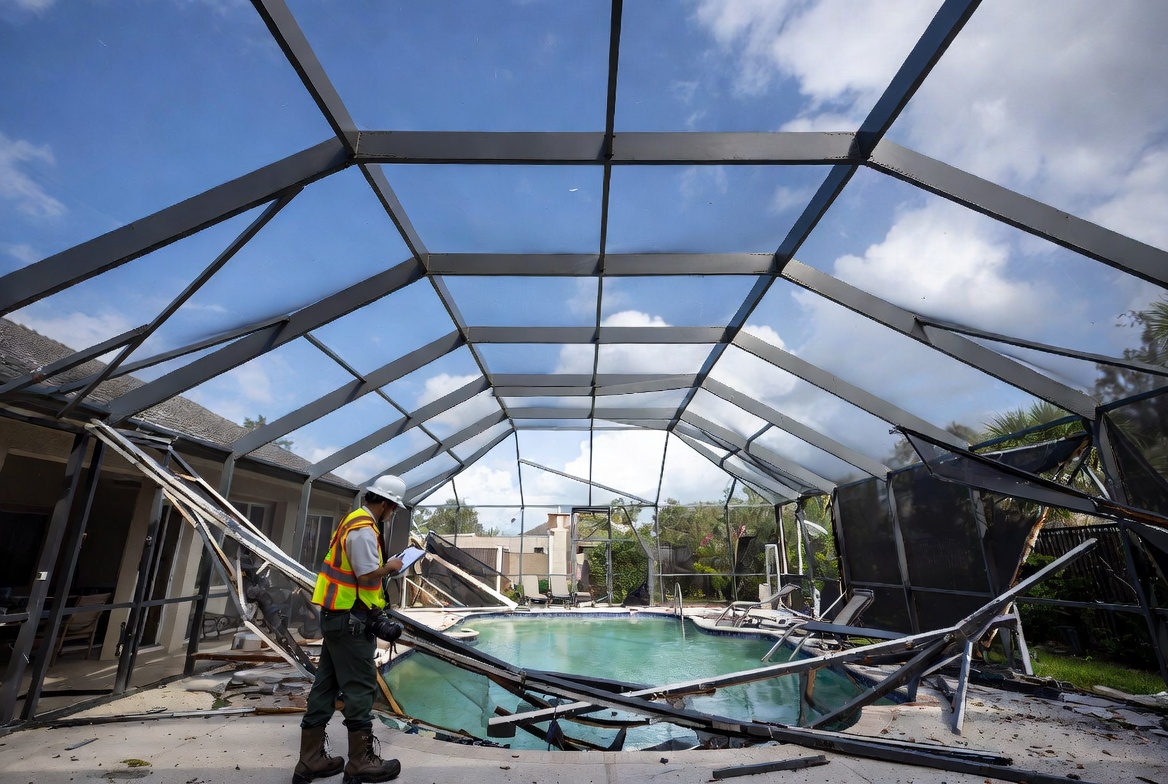
By Gian Nicolo, Owner
After every major storm in Florida, thousands of homeowners walk into their backyard asking the same question:
“Will insurance cover this?”
It’s a reasonable question.
Unfortunately, many homeowners focus on the wrong thing.
They focus on the damage they can see.
Insurance adjusters often focus on something very different.
They focus on:
- Cause
- Condition
- Documentation
- Maintenance history
- Storm-related impact
And understanding that difference can dramatically affect the outcome of a claim.
After years of evaluating storm-damaged pool enclosures, I’ve seen homeowners make the same mistakes repeatedly.
The good news is that most of those mistakes are avoidable.
The First Thing Adjusters Want to Know
The first question is not:
“How bad is the damage?”
The first question is usually:
“What caused the damage?”
That distinction matters.
Because insurance companies generally evaluate:
Sudden Damage
Differently than:
Long-Term Deterioration
Those are not the same thing.
And understanding the difference is critical.
Storm Damage vs Wear and Tear
This is where many claims become complicated.
Let’s imagine two scenarios.
Scenario #1
A tree limb crashes through the enclosure during a hurricane.
That’s sudden.
That’s obvious.
That’s clearly storm-related.
Scenario #2
The enclosure contains:
- Corroded fasteners
- Aging screens
- Existing deterioration
Then a storm arrives.
The adjuster now has to determine:
How much damage came from the storm?
And how much existed beforehand?
This is why condition matters.
The Florida pool cage fastener problem is one of the most common pre-existing conditions that complicates storm claims — corrosion that was developing quietly for years until a hurricane made it visible.
Why Documentation Is So Important
One of the biggest advantages a homeowner can have after a storm is documentation.
Photographs matter.
A lot.
Especially:
Before the Storm
Immediately After the Storm
The more information available, the easier it becomes to establish what changed.
Many homeowners don’t think about documentation until after damage occurs.
By then, opportunities have already been lost.
A 5-minute pool cage inspection before hurricane season creates a baseline. The day after the hurricane creates the comparison. Together, they answer the question adjusters care about most: what changed?
What Adjusters Commonly Photograph
During evaluations, adjusters often document:
Torn Screens
Bent Structural Members
Roof Damage
Impact Points
Fastener Areas
Door Systems
Attachment Points
The objective is understanding both the damage and its cause.
Not simply documenting appearance.
The Maintenance Question
This surprises many homeowners.
Insurance companies frequently care about maintenance.
Why?
Because maintenance affects condition.
Imagine two enclosures.
One has:
- Healthy fasteners
- Good maintenance history
- Strong overall condition
The other has:
- Significant corrosion
- Deferred maintenance
- Existing deterioration
A storm affects both.
The conversation may be very different.
This is one reason inspections and maintenance create value long before a storm occurs.
The most valuable pool cage inspection is often the one that documents good condition before anyone needs to file a claim.
The Tree Problem
Many of the largest claims we see involve trees.
Not wind.
Trees.
Examples include:
- Falling limbs
- Palm impacts
- Entire trees
- Wind-driven debris
Impact damage is often easier to identify than gradual deterioration.
That’s why tree maintenance is one of the most valuable forms of storm preparation available to homeowners.
Protecting your pool enclosure during storm season includes more than tie-downs and screens — it includes what surrounds the structure.
Why Some Claims Become Difficult
Most difficult claims involve uncertainty.
Questions such as:
- When did the damage occur?
- Was the damage pre-existing?
- How much deterioration existed beforehand?
create challenges.
The less documentation available, the harder those questions become.
Hidden problems pool cage inspections reveal are exactly the kind of pre-existing conditions that make adjusters ask harder questions after a storm.
The Homeowner Mistake That Happens Every Year
Waiting.
After a storm, many homeowners delay:
- Documentation
- Evaluations
- Inspections
because the damage doesn’t appear severe.
The problem is that conditions change quickly.
Evidence disappears.
Temporary issues become permanent issues.
The sooner documentation occurs, the better.
The biggest hurricane mistake Florida homeowners make is treating preparation and follow-up as optional — when both often determine how smoothly a claim proceeds.
What Adjusters Notice Immediately
Some of the first things adjusters often notice include:
Obvious Impact Damage
Structural Distortion
Missing Components
Visible Storm Effects
These are relatively straightforward.
The more complicated situations often involve existing conditions that were present before the storm.
Warning signs your pool cage is closer to failure are often the same conditions adjusters document as pre-existing deterioration rather than sudden storm damage.
Why Pre-Storm Inspections Matter
Most homeowners think inspections are about maintenance.
They are.
But they’re also about documentation.
A homeowner who understands the condition of the enclosure before hurricane season begins is in a much stronger position after the storm.
Because they already know:
- What existed
- What didn’t exist
- What changed
That information can be extremely valuable.
The Difference Between Damage and Deterioration
This is probably the most important concept in this article.
Damage and deterioration are not the same thing.
Damage
Often occurs suddenly.
Deterioration
Usually occurs gradually.
Insurance evaluations frequently involve determining where one ends and the other begins.
Understanding that distinction helps homeowners better understand the claims process.
It is the same principle behind why pool cages don’t fail all at once — gradual deterioration often precedes the moment a storm makes failure obvious.
What Smart Homeowners Do After a Storm
The most prepared homeowners usually:
Photograph Everything
Document Conditions
Schedule Evaluations
Save Records
Act Quickly
These simple steps often create better outcomes later.
Final Thoughts
Insurance adjusters don’t simply evaluate what happened during the storm.
They often evaluate the condition of the enclosure itself.
That’s why documentation, inspections, and maintenance matter so much.
The strongest position a homeowner can have after a hurricane is knowledge.
Knowledge of:
- Previous condition
- Current condition
- What changed
Because when questions arise, information becomes one of the most valuable tools available.
And in the world of hurricane claims, good information is often worth far more than homeowners realize.
Call 727-645-9575 or book online.
Need Pool Cage Repair in Largo? Call 727-645-9575 or book a free estimate online .